Category: Home Projects

Home Projects to Repair or Improve

  • Painting my fixer upper

    This house has the worst paint ever. Not only did they spray every room in the house a not very attractive gold, but they used the crappiest paint known to mankind. If you bump it with your elbow it wipes off on your clothes, if you wipe it with a wet cloth the cloth comes away gold. It totally water-soluble.

    The only good thing about this “washable” paint is that the overspray that is all over the white woodwork washes off. It takes an obscene amount of scrubbing and buckets and buckets of water because of the amount of gold paint that comes off, but the paint does wash off.

    I am going to be trying a lot of new products.

    First room

    The first room I painted was the living room and hall. I had great luck with Valspar satin paint in my Texas house so I went back to Lowe’s for the same paint. valspar satin

    But it wasn’t the same paint. It left terrible roller marks and if you tried to go back and smooth them the paint came off the wall. It just wasn’t the same paint. Or maybe it was a function of the crappy paint it was covering. I don’t know, but I wanted a better painting experience with the other rooms I painted.

    I checked out reviews and found a lot of folks who experienced the same thing I did, so it left me thinking it wasn’t the paint I was covering, but changes in the Valspar paint. I absolutely loved this paint the last time I used it so I was really disappointed with the results this time.

    Consumer Reports

    192508-interiorpaints-clarkkensington-satinenamelace

    I decided to see what Consumer Reports had to say about interior paints and found their top rated paint to be Clark + Kensington Satin Enamel from Ace Hardware, so I visited the local Ace Hardware this afternoon and bought this paint for the master bath and den. I wanted an evergreen green for the bath and a bone white for the den area. Two totally different colors both going over my crappy gold paint. I will post a follow-up on the results after painting these two rooms in these two diverse colors.

    The girl who helped me at Ace (she was an absolute sweetie) told me about some new items I had never heard of. I ended up getting a Teflon coated roller pan that she said she had personally used and loved. You allow the paint dry overnight and then just pull out the skin of dried paint the next morning. I can’t wait to try it.

    I also got Teflon rollers that are supposed to be washable. I like the idea of reusing the rollers instead of disposing of them. She also recommended a tool for cleaning them. It has a moon shaped side that will help force the paint out of the water before washing and then the water out of the roller after washing. I plan to use it for cleaning brushes as well.

    I will report how all of these things work after using them. roller cleaner


    Last, but not least, I have to try a new primer. When the door to the garage was being replaced there was evidence of black mold at the lower edge when the casing was removed. I pulled off the ugly paneling on the lower part of the wall to find 2 feet of black mold from the concrete up. That drywall has been replaced after I sprayed with 50/50 solution of bleach and water.

    So I decided I might as well yank off the rest of the paneling that I hated and all that drywall needed to be repaired since the paneling had been glued as well as nailed.

    So I will be trying a new primer on the basement walls, the kitchen soffit where I removed the popcorn (who puts popcorn on kitchen soffiting???), and wall patches I needed to do in the bath. I decided to try Lowe’s Valspar primer that says it’s best for new drywall.

    valspar_primer

    Painting Cabinets

    yong-love

    I found a blog that talked about painting cabinets with great results so I’m going to try the products they used. http://www.younghouselove.com/2012/01/how-to-paint-your-cabinets-aka-hallelujah/. Their cabinets turned out beautifully so I’m going to follow their suggestions with the hope my cabinets will turn out looking half as good as theirs.

    I went to Benjamin Moore and purchased their Fresh Start® Primer and plan to go back and get their ADVANCE Waterborne Interior Alkyd Paint – Satin Finish for the final coats. The ADVANCE is a little pricey at $44 a gallon, but if it levels out and produces the smooth finish I’ve read about it will be worth it.IA_pri_0023_FreshStart_USADVANCE

    Follow Up

    Sheesh — that’s a lot of new products. Heck, it’s a lot of money!

    I will report back with results after I have used all this stuff. I am going to volunteer at the Campbell County Historical Society tomorrow since there’s a 100% chance of rain and I plan to start painting the next day and keep going until I have the bath painted, the den primed and painted (new sheet rock), and the cabinets in the kitchen primed.

    That’s the plan — we’ll see if I stick with it…

  • Great source for appliance parts

    Great source for appliance parts

    When the fan on my refrigerator started sounding like an airplane propeller and my home warranty company completely failed me I started looking for the part on my own and found a company that sells on both Amazon and Ebay. They are awesome.

    homeappliancepartThey suggest in their ad that you call and verify it’s the correct part before ordering. I emailed the model number of my refrigerator and they promptly responded that I had the right replacement fan.

    I asked for an ETA and after supplying my zip code they told me they had the part in a warehouse in Fort Worth and could have it to my Dallas area home the next day without paying for next day shipping.

    I ordered the part at 2 in the afternoon and had it at 1:00 PM the next afternoon.

    The fan cost less than the service call from my warranty company. I called a Dallas parts place and they had the same fan for twice the cost.

    If I need parts in the future HomeAppliancePart will be the first place I check. These are really great guys who know what customer service is about.

    Amazon HomeAppliancePart

    Ebay HomeAppliancePart

  • Insulated cover for whole house attic fan grate

    Insulated cover for whole house attic fan grate

    The pull chain switch in my whole house attic fan broke and I ended up replacing it on a fairly hot day. While working on it I could not believe the heat coming down through the ceiling grate for the fan. 

    I got online to look for an economical and easy solution.

    What’s a whole house attic fan?

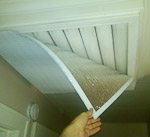
    Insulated cover for whole house attic fan grate - TheDIYGirl.comIn case you’re not familiar, this fan is mounted on the ceiling joists in the attic after a hole has been cut out of the ceiling drywall. An aluminum grate is then installed on the ceiling side. The grate has louvers that open and close. The force of the fan blows them open and then they fall closed once the fan is turned off.

    I absolutely love having a whole house attic fan and would recommend them to anyone whose house layout allows for one. I’m in a three story house and the fan is in the ceiling of the 3rd floor stairwell. I open the windows on all three floors and turn the fan on in the evening to pull the cool air in and blow the warm air up into the attic. It’s incredibly effective at cooling the house down in the spring and fall.

    The down side of a whole house attic fan

    That said, I never use it during the summer since it stays so hot in the Dallas area over night. I had no idea how much heat was coming down from the attic during the hot months of the year. What a waste of energy. I was sure cold came down through it in the winter as well.

    As soon as I realized how much heat was coming in, and since it was summer and I did not want to go up into the attic to do it, I started looking for a friendly solution. Most sites suggested constructing some kind of insulated box to fit over the fan which would require trips into the attic to put it on and take it off. Forget it. I use the fan often during spring and fall and I would not go into the attic to place and remove a cover.

    Then I found Go Green Energy Consulting DIY idea #8:

    We highly recommend that homeowners with whole house fans  cover the grate with a detachable insulated cover when not in use. Lots of heat is able to radiate down from the attic through what is essentially an open hole in the ceiling. Most home improvement stores sell pre-made kits to help you do this yourself, or this is an easy project for a professional.

    Insulated cover for whole house attic fan grate - TheDIYGirl.com

    Finding the materials

    I checked the big box home improvement stores and while they sold the foil covered bubble insulation, it was either in small widths that would have to be pieced or huge rolls that would leave me with a bunch of leftover material. It was the same with most retail places on the internet — either too narrow or too much.

    I checked the web and found Innovative Insulation Inc. in Arlington, TX. I talked to them and asked if they would allow me to purchase just one yard of the insulation that was 48″ wide. I was shocked when they asked for my address and said they’d ship me a piece for free. They sent it FedEx and it arrived the next day. They obviously can’t afford to do this for everyone, but they are one place that will ship small quantities. You will note that my insulation is foil on both sides instead of white on one. I asked for white on one side, but when they shipped the wrong one for free I wasn’t about to complain and just used what they sent.

    Next I went on a search for Velcro and found a 15′ roll of Velcro with adhesive. My concern was that the first time I tried to remove the cover the Velcro would stay together and it would pull off the grate or off the insulation and be worthless. Or it would not detach, but then not be strong enough to hold the insulation in place. My concerns were unfounded. The cover has been yanked off and put up multiple times and the Velcro is rock solid.

    Left over material

    I have an attic hatch instead of stair (another thing that requires a ladder on the third floor) and I had enough of the insulation left over to cover the hatch door in the ceiling. I had to piece it a little bit, but I stapled it on the attic side of the hatch cover to block heat and cold from there as well.

    Results

    I’ve gotten up and checked a few times on really hot days and there is little or no heat coming through the insulated cover.

    My only issue with the cover is as a short person this is going to require a ladder each and every time I put it up or remove it and I’m not thrilled about having to keep a ladder upstairs. I tried reaching from a chair and I can just barely get hold of an edge so maybe I can take it down that way, but maneuvering the pull on/off chain under the cover while I put it up will always require a ladder. After I put it up there were a couple cool fronts during which I could open the windows so the cover had to come down. Then it would heat up again and I’d need to put if back up.

    Despite the inconvenience I still feel the ease of making and using this cover is a great way to insulate from heat and cooling loss when you have a whole house attic fan.

    The bubble insulation is such a cool product I did research on other things it could be used for.

  • Replacing pull chain for whole house attic fan

    Replacing pull chain for whole house attic fan

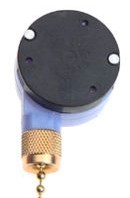
    One evening I pulled the chain on my whole house attic fan to turn it off and thought at the time it sounded a little funny. The next morning I went to turn the fan back on and found out why — the switch for the pull chain had broken. I am not a big fan of getting up in my attic since I live alone, so I got a ladder and checked to see if the switch was accessible from the house instead of the attic. It was. I had to reach through the grate and it required some dismantling, but I got the switch out and headed for the computer to find one here in town. I love my attic fan so much and wanted it working again immediately. I called everywhere; hardware stores, lighting stores, electrical supply stores, Radio Shack. I went to the big box home improvement stores hoping they would carry it despite the fact it wasn’t listed on their web sites. No one carried the switch I needed locally. I gave up and couldn’t believe the best price I could find on ordering it was once again on Amazon for $7.99 and no shipping. The switch came with wiring instructions and was easy to put in. I reassembled the box it was housed in and everything worked perfectly. The switch came with a pull string so I added the chain from the old switch and it was good to go. Whole house fans start at $200 so I was thrilled mine could be easily repaired for $8.

  • Shower stall re-grout and re-caulk project

    Shower stall re-grout and re-caulk project

    Defining the problems

    I have two showers stalls with ceramic tile walls and floors and glass doors and both are in need of repair. The master bathroom gets the most use and is in the worst shape so I’ll start with that one.

    The master bathroom shower had been “repaired” by the previous owners of the house and they had chosen to use white caulk along the seam where the walls and floor meet and about 12″ up 3 corners. This caulk is deteriorating and cracking. I want to completely remove the caulk and replace with white grout like the rest of the shower.

    The previous owners had also used white caulk on the seams where the shower doors meet the ceramic shower wall and this is starting to crack so I want to completely remove it and reapply fresh caulk sealing the glass wall and doors to the stall.

    Lastly, they had smeared caulk around the escutcheon plates for the hot and cold faucets so it looks terrible. I want to remove it and figure out what’s the proper thing to do with the plates. More on this later since I have to do some research.

    Overall project steps:

    1. get organized
    2. remove deteriorated caulk and grout
    3. reapply grout
    4. reapply caulk
    5. shower clean up

    Learning how to do it

    Obviously the first step in this project is removing the old caulk. I started with research on the internet and found a great article  at PopularMechanics.com that pretty much told me everything I needed to know about the removal. http://www.popularmechanics.com/home/improvement/interior/4213124

    To summarize their steps:

    1. Apply caulk remover
    2. Cut through softened caulk
    3. Pull the caulk out of the joint
    4. Rake remaining caulk from the joint
    5. clean the surface of soap scum and apply bleach solution to kill mildew
    6. apply tub and tile caulk with fungicide

    I strongly suggest you read their article for a little more detail.

    Suggested List of Tools and Supplies

    • caulk remover
    • window scraper
    • utility knife
    • needle-nose pliers
    • small screw driver (for digging tough stuff out)
    • rags
    • bucket for debris
    • protective covering for hands (I’m really bad about doing this)
    • cleaner to remove soap scum (not ammonia since you’ll follow up with bleach!)
    • small spray bottle (for bleach solution)
    • acrylic or silicone caulk

    Finding the remover

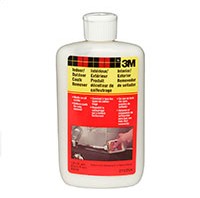
    Popular Mechanics recommended 3M Caulk Remover and I wanted to try it, so the first task was to track that down. Although I love the simplicity of ordering from Amazon and having the stuff show up on my doorstep, I wanted to start working on the project and didn’t want to wait a few days for shipping.

    I tried the obvious places first — the big box home improvement stores — but neither listed it online so I ran by a store to see if they might carry it locally . No luck. I found it online at Ace Hardware so I called the nearest store and they had one bottle left on the shelf.

    Working with the remover

    A little warning about working with the 3M Caulk Remover. The remover needs to sit on the caulk for a minimum of 2-3 hours before you can start removing the caulk. If the caulk is older  and really hardened or it there are several layers of caulk it would need to sit even longer. So plan in advance to apply this remover and go find something else to do while it works.

    The bottle is only supposed to cover 24 linear feet of caulk and I was running close to that limit so I didn’t want to overuse the product. A lesson learned the hard way — if the remover doesn’t cover the caulk it doesn’t soften anything, so make sure you have complete coverage without smearing it all over. Just make sure you have a thin layer covering all the caulk.

    The great thing about this remover is that it truly clings to vertical surfaces and doesn’t run down. I had a lot of vertical caulk to remove and there was no problem getting the remover to stay in place.

    I came back a couple of hours later and started loosening the edges of the caulk with a simple window scraper like the one pictured here along the metal frame of the glass shower walls. I used a utility knife to clean out the seam between the ceramic walls and floor. I was afraid to use the utility knife on the metal frame since it might score the metal.

    Once cut loose it’s a fairly easy process to pull the caulk away and as the Popular Mechanics article mentioned I did have to use a needle-nose plier at times to grab the caulk. It quickly became evident where I missed covering with the remover since that section wouldn’t let go and it took a lot more work with the razor blade to get it loose.

    Be prepared – the process is a little messy because of the runny remover and then the somewhat melted state of the caulk itself. I kept a bucket next to me to put the gelatinous mess into as I removed it. The 3M Caulk Remover worked great and with only a couple of hours work I had the caulk completely removed.

    As suggested in the article I washed the surfaces where the caulk had been. Popular Mechanics next suggested using a foam brush to work in a bleach solution into the crevices. Since it wouldn’t take a large amount of the solution I got a small spray bottle with water, added a little bleach and sprayed down the areas where the caulk had been removed. So the bleach would have ample time to kill mildew I re-sprayed a while later and let it all dry overnight.

    Before working in the shower again I thoroughly wiped the floor down to remove any bleach residue. I didn’t want to accidentally track bleach out of the shower and damage something.

    Product comparison

    Okay — now I’m annoyed. I ran out of the 3M Caulk Remover and I needed to remove the caulk that was smeared all over the faucet escutcheons and the wall where they have been caulked. I was too lazy to go back and get another bottle of the 3M and bought what was available at the nearest big box home improvement store. It wasn’t exactly being lazy — I had bought the last bottle at Ace and was afraid they hadn’t had a chance to restock.

    The employee who helped me at the big box recommended Motsenbocker’s Lift Off (it was all they carried) and a caulk remover tool. I asked her if the stuff works and she said customers had said it worked okay. I was skeptical but bought it anyway.

    The bottle said you had to remove as much caulk as possible, but it said you only had to wait 2-3 minutes as opposed to 2-3 hours. So in my opinion it makes it a caulk residue remover instead of a true caulk remover. It suggested you check for colorfastness first, but that wouldn’t be an issue with ceramic tile and metal.

    The results

    The Motsenbocker’s is a gel that comes in a spray bottle. First thing — the caulk remover ran down the wall no matter what I did. Next the plastic caulk remover tool promptly melted and the edge became jagged when I scraped the old caulk off the shower wall. Great. And I noticed my hands were burning where ever the remover had come in contact with my skin. Then I went over to the counter to remove the caulk from the metal escutcheon plates and apparently the plates had a protective plastic coating that melted from the remover.

    This is directly off Mostenbocker’s website:

    Safe On:
    Hands • Tools • Fiberglass • Hard Surface • Flooring • Fabrics • Carpet • Ceramic • Stone • Wood • Plastic • Metal • Vinyl • Foam Application Equipment & More!

    Safe on hands, plastic, metal? I don’t think so. And the fumes in my bathroom were awful from the supposedly eco-friendly product. I was left in a quandary of where to wash up since I didn’t want the caulk remover to ruin any of my sinks.

    Summary of my experience with caulk removers:

    Issue Motsenbacher’s 3M Caulk Remover
    safe for hands? burns skin no skin irritation
    vertical surfaces product runs product stays put
    fumes unpleasant & lingering none noticed
    melts plastic? yes yes
    product performance had to apply repeatedly one application worked
    preparation had to remove caulk none – just apply


    What will I do in the future? In all fairness I think the 3M Caulk remover melts plastic too. I had a plastic handle utility knife and the color was coming off on my hand because of the remover. So be careful what tools you use and what you use the remover on.

    Next time I’m going to prepare in advance and order the 3M or drive to a store where I can purchase it. The Motsenbocker’s and ruined caulk remover tool are going back for a refund tomorrow.

    Okay — now on to re-grouting the shower.

    Grouting steps:

          • Mix the grout with water
          • Let mixture rest for 5-10 minutes
          • Push grout into gaps and smooth out
          • Wait 10-20 minutes
          • Remove excess grout
          • Allow to dry 30-45 minutes
          • Polish with soft cloth
          • Wait 2-4 hours
          • Lightly mist grout several times a day for 3 days

    Tool list:

          • Grout
          • Plastic cup
          • Stirrer (I used a plastic spoon)
          • Nitrile gloves
          • Rags
          • Soft cloth
          • Spray bottle with clean water

    I didn’t have a lot of grouting to do, but the process is long whether it’s a small amount or an entire shower. There are multiple steps and the grout will need to cure for 3 days after it’s done. None of the steps are difficult, but each is important.

    I had a 1 lb. box of white grout (the image at right is the grout I used) I had used before and kept stored in the garage. The box specifically said it was for gaps no larger the 1/8” and none of mine were that large. The box also said it contained Portland Cement and gloves and face protection should be used. I wore gloves, but for such a small amount didn’t think face protection was needed.

    Note: If you aren’t using a new box/bag of grout you might want to run it through a sieve to get lumps out. My grout had apparently formed some clumps from moisture out in the garage and they didn’t break down when I mixed the grout. It was a pain to deal with and in retrospect I should have thrown it out and started again with sifted grout that didn’t contain the lumps.

    I added water and mixed the grout until it was a stiff paste and wasn’t runny. The directions on the box say to let the grout rest (they used the word “slake”) 5-10 minutes. Since it was a small amount I went for 5 minutes.

    I applied the grout using my finger (wearing nitrile gloves) since the grout was going in corner joints. I pushed as much grout into the joint as I could and then smoothed it out with my fingertip. The grout doesn’t need to be perfect at this point, but the gaps should be thoroughly filled with grout.

    Wait 10-20 minutes for the grout to firm up.

    I used a rag that that had been completely wrung out (a sponge also works) and wiped in circular motions to remove the excess grout. I rinsed out and wrung the rag regularly to keep it clean. When I was finished the grout was cleaned off the tile surfaces, and nicely filled in the gaps. This will be how the grout looks when dry, so I made sure it looked good before allowing it to set up.

    The grout to needed dry for another 30-45 minutes before I could wipe the surfaces with a soft cloth to polish the last haze of grout from the tiles.

    Curing process: The grout needs to cure for 3 days and should not be allowed to get completely dry. Several times a day I lightly misted the new grout with a spray bottle of plain, clean water to keep it slightly damp.

    That’s it. At the end of three days the grout was dry and ready for normal use. My shower wasn’t ready yet since I still had to replace the caulk sealing the shower walls to the ceramic.

    Tool list:

          • Caulk
          • Caulk gun
          • Utility knife
          • Nitrile gloves
          • Rags or paper towels

    What kind of caulk to use

    When I went to the store to buy a new tube of caulk I was still undecided about using acrylic or silicone. There was some hard water damage to the metal frames of the glass shower walls that would be hidden by white acrylic so I was leaning in that direction. As the Popular Mechanics article had suggested, I wanted something that was anti-microbial and would discourage mildew growth.

    I had a tube of white acrylic in my hand when I stopped to read the labels on the silicone caulk. It said things like 10 year mold free, permanently waterproof, flexible, shrink/crack proof. Hmm… When I had removed the caulk the previous owners had put in the shower I discovered they had caulked over the original clear silicone. That original silicone was still flexible and really stubborn about coming out of the seam. Since I wanted totally waterproof and really long-lasting I bought the GE Silicone II Supreme.

    Applying the caulk

    I have always been kind of frustrated because I totally suck at applying caulk. I get too much on, get it all over everything (me included), and it never looks like a professional job. I finally figured out what I always do wrong — I cut the opening on the tip of the caulk tube too big. This time I used the utility knife to cut maybe less than an 1/8″ angled opening. It was so small the piercing tool on my caulk gun barely fit in the hole to open the membrane sealing the silicone. What a difference a smaller opening made.

    Note: the smart thing to do would be to wear gloves so you don’t make a mess of your hands.

    I applied a thin line of caulk to where the shower walls met the ceramic tile, wiped it down with my fingertip to smooth it out and make sure it was in the gap, wiped my fingertip clean on a paper tool and before I knew it I was done. The lines of caulk looked perfect and for the first time I didn’t have caulk everywhere.

    What to do with the escutcheon plates

    The last thing I needed to do was reinstall the escutcheon plates for the faucet handles. After researching on the internet I decided to use the silicone caulk to seal them to the walls. The plate itself has a rubber seal around the center hole to prevent water from getting behind the plate and into the wall behind the shower. There were a lot of differing opinions about whether to seal them and what to use. Sealing them seems like a no-brainer to me — who wants moisture and mold developing behind the plates or allowing water to get behind the ceramic and into the wall?

    The bottom line was the seal needed to be easily removable if a problem developed with the plumbing later and I knew the silicone could be quickly cut through for access to the wall. I applied a thin line of silicone all around the escutcheon plates and smoothed it out.

    Note: Some people suggested packing the hole where the plumbing comes out through the ceramic and plumbers followed up with comments that it was a really bad idea. Others had used plumbers putty and another plumber noted there are only 3 uses for that putty: 1. seating a drain in a sink, 2. seating a sink on a counter, 3. seating the faucet on a sink.

    Lesson learned

    If you cut the hole on the caulk tube too big, you apply too much caulk, you have to wipe all the excess (and wasted) caulk off, and you get it everywhere. From now on I will start with a small opening and only make the it larger if needed.

    The important thing is how the silicone holds up over time, but as far as application I would recommend GE Silicone II Supreme.

    I’m down to the final clean up and the shower will be done.

    The last step

    I wanted to do a thorough soap scum and hard water residue removal to finish the shower. I had removed the plastic hot and cold water knobs and the shower head and soaked them in white vinegar to remove the hard water. The black plastic on the shower head had started out white and crusty with hard water and after soaking was perfectly clean. I replaced those after they were clean.

    As mentioned previously I had purchased Barkeeper’s Friend on the recommendation of the Manly Housekeeper in his article on soap scum removal. So I got in the shower figuring I would have to kill myself scrubbing off soap scum, etc.

    Guess what? There wasn’t hardly any there. The only thing that was stained a little was some the grout in the floor from me tromping in and out working on the grout and caulk. I still used Barkeeper’s Friend to scrub the ceramic and glass walls top to bottom and got a brush to scrub the floor. When I was done the floor looked as pristine as the walls.

    So why no soap scum?

    Because of the glass walls on 2 sides I had started using a shower spray a few years back. I hadn’t been particularly thrilled with its performance (I still had hard water and soap scum that had to be scoured off) and really didn’t like the cost. I figured there had to be a way to make a cheaper version at home so I started doing research. Feel free to research yourself, but after reading several ideas this is the concoction I’ve been using for the last 3 or 4 years and it has significantly cut down on shower cleaning.

    Here’s a link to the shower spray recipe.

    The finished shower

    Not bad for the original shower in a 28-year-old house. Yes, I know I need a bathroom update, but I don’t want to spend the money on it right now, so I’ll keep maintaining what I’ve got. And what did it cost me to do this refurb? I used tools I already had and spent about $20 on Barkeeper’s Friend, 3M Caulk Remover, and GE Silicone II Supreme Caulk. Not bad at all.

    Shower stall re-grout and re-caulk - Step 5 final clean up

    Shower stall re-grout and re-caulk - Step 5 final clean up

  • Repair leaking bathroom faucet handle

    Repair leaking bathroom faucet handle

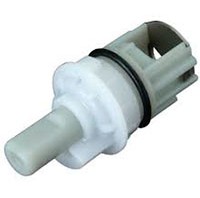
    I have Delta/Delex faucets with separate hot and cold water handles. The first time I had a leaky faucet I took out the old valve stem and went to a home improvement store and asked them to help me match it. I purchased a box of 5 valve stems, springs, and seats. I figured this wouldn’t be the only leak since I have 6 identical faucets in three bathrooms.

    Tool list

          • Phillips head screwdriver
          • channel locks
          • needle-nose pliers
          • small screw driver
          • rags

    I turned the water off under the sink going to both faucets. The turn valves don’t seem to age well and this always makes me a little nervous since they can break. I once had a valve to a toilet break and start pouring water into the bathroom until I shut the water main off. Which brings up a good point. Before starting a plumbing project make sure you know where the main shut off is and how to turn it off (some need a tool) just in case something goes wrong unexpectedly.

    To get to the valve stem I had to pop the caps that say “H” and “C” on the top of the faucet handles, remove the screw, and remove the plastic handle.

    The handle is screwed into the top of the valve stem. To get the valve stem out on the Delta/Delex there is a brass ring that needs to be removed. I wrapped it in a cloth (to prevent damage to the ring) and used a channel locks to turn counter-clockwise and remove the ring.

    If the ring has gotten stuck due to hard water deposits, I have had to soak a cloth in white vinegar and wrap it around the ring. I let it sit for a few minutes to allow the acid in the vinegar to work on the deposits. DO NOT get too aggressive if the ring is stuck since you could turn the entire thing and kink the copper tubing under the sink.

    Once the ring was off I still had a hard time getting the hot water valve stem out and had to work around the edge with a small screwdriver prying it and while being careful to not gouge up the brass.

    When the old valve stem was out I used rags to soak up the water down in the hole. At the bottom is a round black rubber seat. I removed it with a needle-nose plier. Once that was out I could see the spring under it and removed it also. I took care to note the direction of the seat and the spring when I removed them so I could make sure I put the new parts in correctly. The spring is narrower on one end and needs to go in the correct way.

    If I’m replacing a valve stem I go ahead and replace the seat and spring while I have it disassembled. I’m never sure what exactly is leaking and it seems wise to start with all fresh parts.

    I put the seat over the spring, grabbed the assembled seat/spring with a needle-nose and inserted them in the hole. I used the handle end of a small screwdriver to push the seat down into place.

    Once the seat and spring were in, it was a simple matter of putting in the new valve stem and screwing down the brass ring. I was careful to tighten the ring, but stop when the whole thing started to turn — again not wanting to kink the copper tubing under the sink.

    I screwed the handles back on, popped the “H” and “C” in making sure they were on the correct handle.

    I turned the water back on under the sink and tested both faucets. No leaks!


  • Refinishing rusty metal – Ospho

    Refinishing rusty metal – Ospho

    When I bought my house the 2 decks on the back were cantilevered (supported by floor joints extending outside the house), but they had never been cared for and were literally rotting off the back of the house. I decided to have those decks removed and replaced with decks supports by steel posts.

    The steel posts will probably be standing when everything else is gone, but they are a maintenance issue since every nick or crack in the paint is an opening for rust formation. After 10 years there were quite of few rusty places and the white paint on the posts also had a black film developing so it was time to refinish the posts. All 14 of them. Groan.

    I have a friend who is a boat captain who had great suggestions on how to clean up and refinish my rusted metal. His experience with metal boat hulls in salt water provided the best product imaginable for this huge project – Ospho. I had never heard of it and I can’t tell you how happy I am that I did. If you have exterior stuff that is rusted and you want to stop the rust dead in its tracks, this is the stuff to use. Quoted from the Ospho site “When applied to rusted surfaces, OSPHO causes iron oxide (rust) to chemically change to iron phosphate – an inert, hard substance that turns the metal black.” They list the stores that carry it on their website. http://www.ospho.com

    There was no way I was going to completely strip all 14 posts so my plan was to remove all visible rust and bad spots, sand the remaining paint, and refinish from there.

    While the write up for this project isn’t long, it was an extremely tedious multi-day project so I’m not telling anyone it’s easy. The results are awesome, however. The steps I followed would work well for any outdoor rust problem whether it’s posts, a fence, etc.

    Steps of project:

    1. Remove all visible rust down to clean metal
    2. Sand entire posts
    3. Apply Ospho
    4. Apply Primer
    5. Apply 2 coats of paint

    1. Grind off rusty areas. I had to get rid of the black film that was forming and I wanted to make sure there was no oil or grease on the posts, so I scrubbed them all down with a good cleaning solution first and let them thoroughly dry.

    The instructions for the Ospho product I was going to use stated: “You do not have to remove tight rust. Merely remove loose paint and rust scale, dirt, oil, grease and other accumulations with a wire brush.” Despite what Ospho said, I decided to use a grinder with a wire brush attachment to remove all the rusty spots. I didn’t want a bumpy surface on the posts and I wasn’t sure how it would look if I left the rust, so I spent a couple days grinding away the rust.

    2. Sand the posts. I wanted the primer and paint to adhere so I sanded the remaining paint with medium grit sandpaper and them wiped them down to remove the debris from grinding and sanding.

    3. Apply Ospho. Ospho is a pale green liquid that is a little runnier than a gel. I used a paint brush and painted a coat of it on the posts from top to bottom, even over the paint in case there was rust that wasn’t yet visible to me. I let it do it’s thing overnight.

    4. Apply primer. I wiped the posts down with rags to remove any powdery residue from the Ospho and applied oil base white primer and allowed it to dry overnight. My posts are white, so I didn’t want to start with a gray primer.

    5. Apply 2 coats of paint. I lightly sanded the posts before each coat and applied 2 coats of oil base Rustoleum paint.

    Doesn’t sound that bad, but I did this during Texas summer in 100 degree heat. Grinding the posts took a couple days, as did each coat of paint on that many posts. Due to high humidity I let everything dry at least 24 hours.

    It was worth the effort, because the posts were back to snow white and beautiful.

    Refinishing rusty metal - Ospho - The DIY Girl